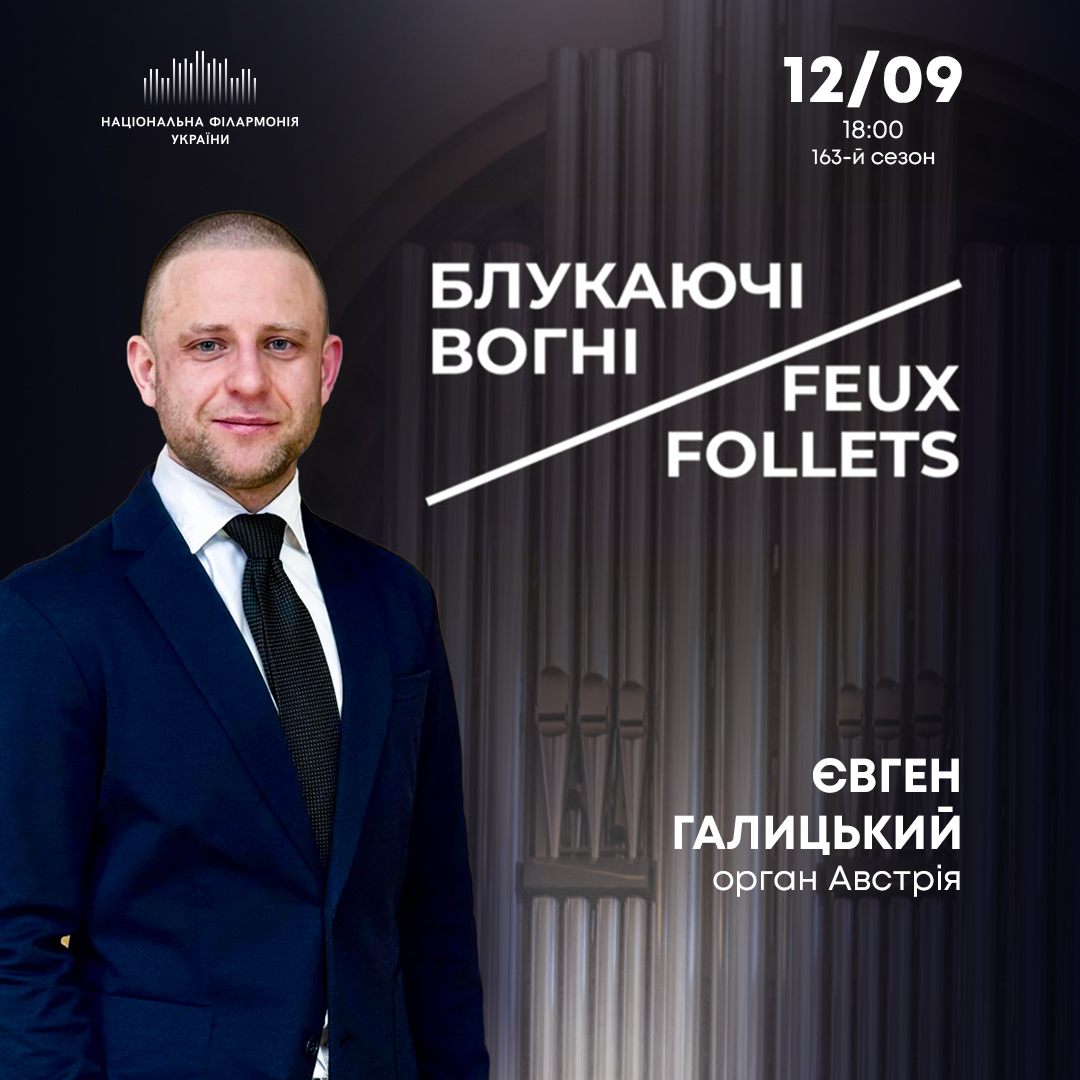
The organ can sound majestic and austere, anxious and mysterious, tender and almost elusive. This is precisely how it reveals itself in Eugen Galitzky’s programme, where music from different eras is united by a shared atmosphere of tension, contrast and inner movement.
The concert opens with Bach and Mozart, whose music combines remarkable precision and architectural clarity with deep emotional intensity. Jan Welmers’ Litanie takes the listener in a very different direction, gradually building from quiet, almost meditative sounds into a powerful wave of sound before returning to silence.
The second half brings a darker and more dramatic atmosphere. Petr Eben’s Walpurgis Night evokes a mysterious, almost demonic world, while Louis Vierne’s Feux follets creates the image of elusive lights flickering in the darkness through its rapid passages and shimmering harmonies. Mendelssohn’s First Sonata adds another dimension, combining lyrical melodies, contrapuntal writing and virtuoso brilliance.
The programme ends with the music of Astor Piazzolla. Oblivion brings a moment of quiet melancholy, while Libertango changes the mood completely, filling the concert hall with rhythm, energy and the unmistakable spirit of tango nuevo.
From Bach and Mozart to Piazzolla, the programme is a journey through very different musical worlds — and a reminder of just how expressive and versatile the organ can be.
Part I
J. S. Bach – Prelude and Fugue in E minor, BWV 548
Jan Welmers – Litany for organ
W. A. Mozart – Adagio and Fugue in C minor, KV 426/546
Part II
Petr Eben – Walpurgis Night from the Faust Suite for organ
Louis Vierne – Feux Follets from Suite No. 2, Op. 53
Felix Mendelssohn – Sonata №1, Op. 65
I. Allegro
II. Adagio
III. Andante recitativo
IV. Allegro assai vivace
Astor Piazzolla – Oblivion
Astor Piazzolla – Libertango